You are logged in as
Logout
You are logged in as
Logout

Dear Parents and Caregivers
The College has settled into a busy Term 1 programme for our Year 11 students, a term that is very much a “setting up for success” one – establishing routines, understanding expectations, and knowing what lies ahead.
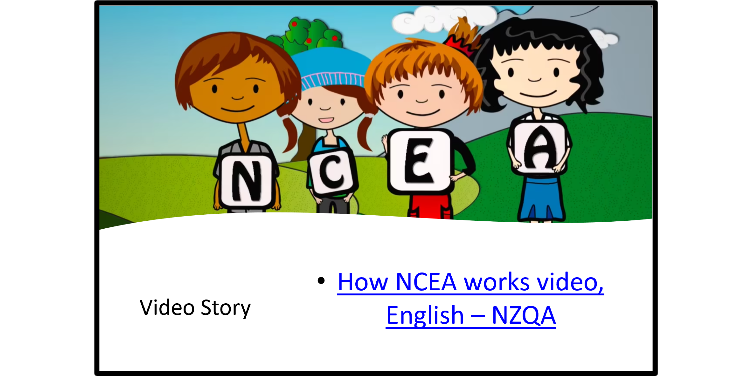
In this newsletter, the first of a series of informative issues through 2026, I’ll outline some information on the qualification that your child is engaging with this year. You will also see a hyperlink to a short video produced by NZQA. To gain a good grounding in NCEA, I encourage you to watch it. It is only around five minutes long.
 Along with the above, I’ll use the different parts of our NCEA page on StACNet, and the Community Portal, to help you learn about some key aspects of NCEA as it occurs in the College, including the main rules that we have for NCEA assessment. You’ll find that we provide you with much information and enable you to easily access your child’s NCEA information throughout the year.
And, finally, there are a few details for you to read about the basics of NCEA, including the Literacy and Numeracy requirement which is still a relatively new part of the qualification.
My hope for parents is that they take NCEA in byte-sized bits and so eventually get their heads around it. More newsletters this year will provide you with further ‘bits’ but, if you ever have any questions that you’d like clarified or explained, please do get in touch with me.
If you want to jump ahead and find out more about NCEA before my next newsletter, please click on the links below to view the NCEA factsheets.
More newsletters this year will provide you with further information but, if you ever have any questions that you’d like clarified or explained, please do get in touch via email at DBV@stac.school.nz.
Kind regards
David Bevin
Head of Teaching and Learning – Secondary

At this meeting, I talked to students about the ‘basics’ of NCEA.
In our next meeting on Thursday 19 March, I will cover additional topics such as course endorsement, academic awards, our assessment rules, the student portal for accessing NCEA results.
It’s always good to know what lies ahead for your students as the busy life of a parent can often make it hard for them to know what and when to look out for. The following table shows in brief form how the year is looking and what parents could look out for to help their student know how to manage the study load alongside their ‘life load’!
The table outlines the ‘shape’ of the academic year and shows what lies ahead and what to watch out for when it comes to assessment commitments because every internal assessment has a significance attached to it. It’s very easy to see where things might possibly come to a bit of a ‘crunch point’ for students.
Where does your child fit into this picture? What are their commitments likely to be this year? What, and when, will be their ‘crunch/pressure points’? How do they cope with such points? You really should talk about these things with them and have some honest discussion about how to manage. I would even advise you and your child to go as far as plotting on a calendar or a wall planner as many of the key events as they know of at this stage of the year. Right now, students are able to include their Term 1 assessments and, by looking through their course outlines, can gain an indication of what assessments happen later in Terms 2 and 3 in particular.
A PICTURE OF THE YEAR 11 2026 ACADEMIC YEAR – WHAT TO BE AWARE OF
|
TERM |
LENGTH (WEEKS) |
WHAT’S HAPPENING |
BE AWARE OF |
CHECK FOR |
|
1 |
10 |
|
|
|
|
2 |
9 |
|
|
|
|
3 |
10 |
|
|
|
|
4 |
4 |
|
|
|
During this term, I will be speaking to students about what they need to show and do to manage the demands of Level 1 NCEA. Alongside developing their knowledge and understanding of the course content learnt this year, students need to:
A good number of students don’t experience too many problems with managing their various loads while, for others, it’s a real ‘jolt’ and a challenge to their ability to manage their time, prioritise their commitments and cover all of the assessment demands made of them.
Hopefully just about everything that you would like to know about is accessed on StACNet, such as the Course Outlines, NCEA Results, NCEA Assessment Calendar, examinations and so on.

Select StACNet at the top, and then to:
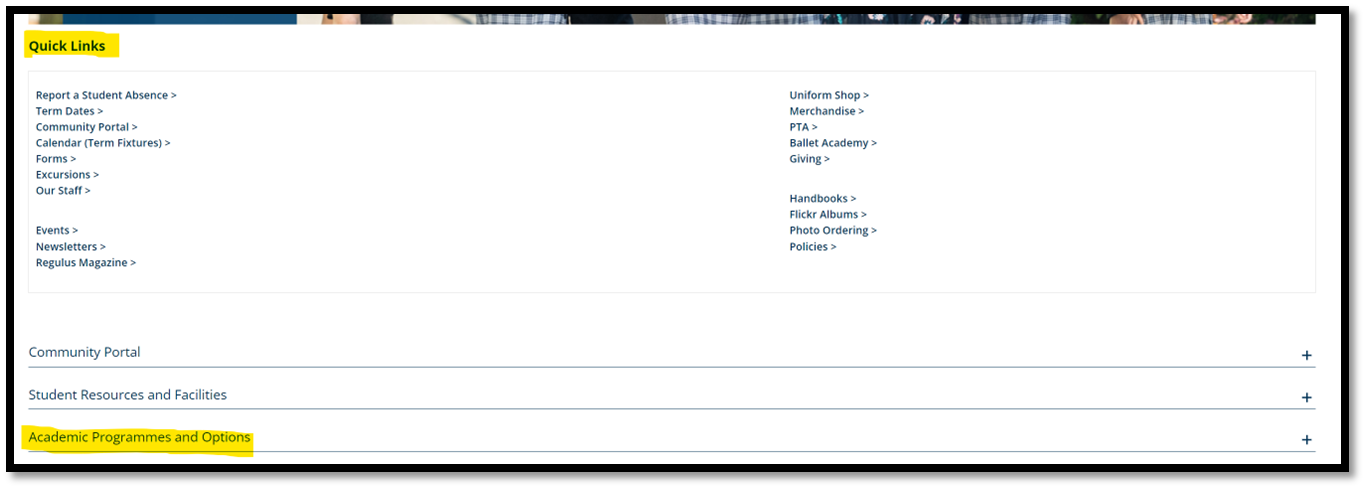
You will be able to access the ‘Course Outlines 2026’ folder as shown in the screen shot. All course outlines are presented in very similar formats so that you can easily find your way around them and will be able to read through the subject’s assessment information. This will help you and your child to gain a good view of the subject’s assessment programme for the year and so manage the planing.
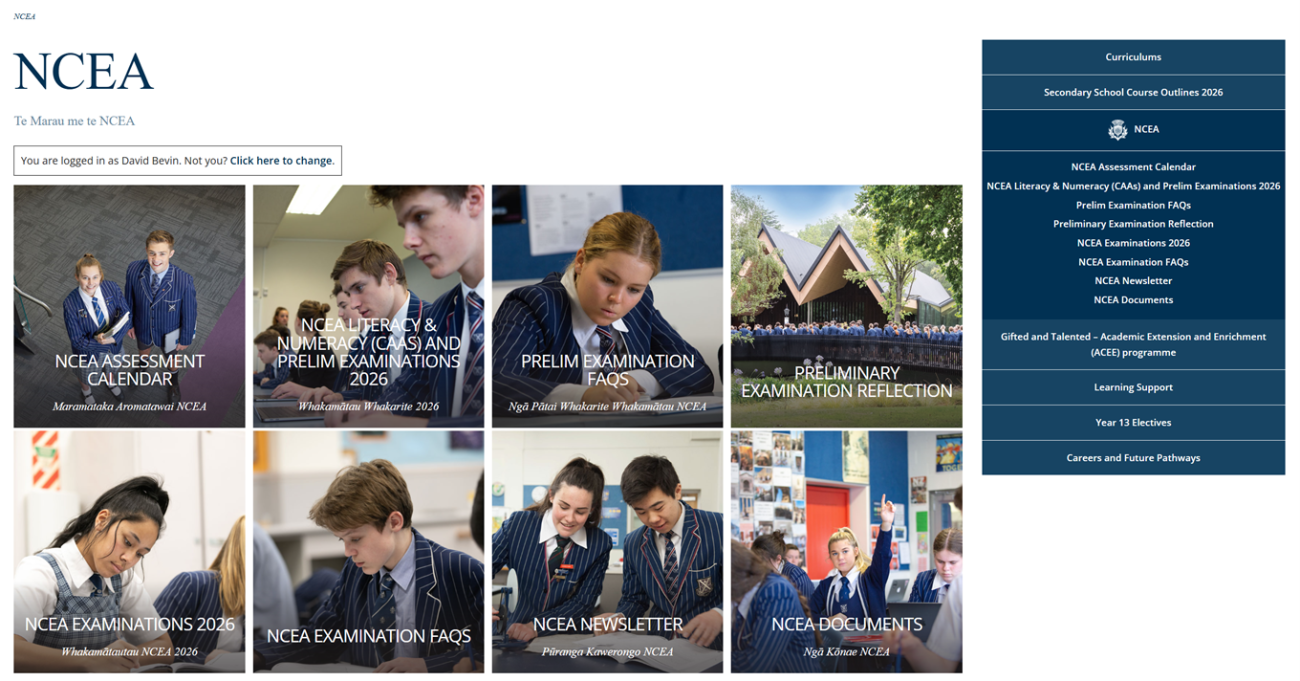
Then, to access the NCEA information, it’s all right there alongside the Course Outlines Button. Throughout this year, the various folders will be updated as needed and you will regularly be referred to one or more of them in my newsletters or in emails that you will receive.
Internal assessment is obviously the big concern for students this year. Most students will be assessed in up to 12 internals across the year. A few students will gain their NCEA through internal assessment before they even sit the external examinations in November and, as such, internal assessment is ‘high stakes’.
We have clear rules and procedures for students to follow covering many matters including student absence from an internal, late submission and breaches of authenticity and these are all detailed in the student copy of the ‘Rules and Procedures’. All Year 11 students will receive their own copy of the ‘R & P’ booklet in tutor time; they must be sure to read them as the rules must be, and are, applied in all assessments.
The NCEA Assessment Calendar is found on the NCEA StACNet page.
This very important calendar provides some overview information about what assessments are on when, according to each year level. Please note that assessment programmes are of necessity a little ‘fluid’ and therefore dates sometimes change; teachers are expected to keep students and parents informed of such changes so please understand that what is on the Calendar, while it’s accurate, is not ‘set in stone’. The NCEA Assessment Calendar provides an important way of helping your child to programme their commitments term-by-term.
In my next newsletter, I’ll more fully explore the rules that we apply to the management of internal assessments, however, issues around extensions and absence from assessments occur every year and have begun to occur already so it is important for you to know that we have clear processes and rules for managing those issues so that assessment is fair to all students. Students simply cannot just hand in an assessment late or not turn up to a test without having a valid, and approved, reason. They must follow our procedures in this area.
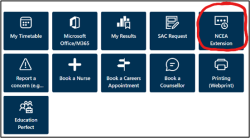 This week, a post was placed in each tutor group Teams page providing information about how students find the link to the online form for applying for an extension in an NCEA assessment. The process is very simple, and I can already confidently say that it does work well.
For medical conditions, students must provide a medical certificate as part of their application as shown here; if they do not, they will not have an extension. This is non-negotiable on the school’s part.


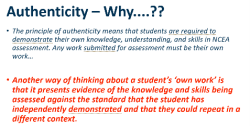
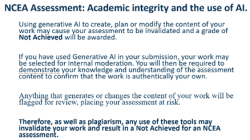
In a year group meeting this week, Year 11 students heard that while AI tools can support learning (e.g., generating practice questions, clarifying concepts), they must not use AI to complete or produce any part of an NCEA internal assessment.
|
|
|
|
This includes:
Please do reinforce this message at home – the intent is to preserve fairness, integrity, and genuine student learning.
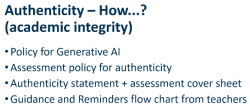
Over the next week students will complete the digital signing of the annual NCEA Assessment Authenticity Statement, confirming their understanding of our rules that support authenticity.
It’s very relevant at this point to remind you of the ‘one-stop shop’ nature of our Community Portal. Parents are able to access a lot of information provided by the College with regard to attendance, assessment and reporting.
When you click on the Results tab on the right of the screen, you will be able to access both the Weekly Feedback and the ‘powerful’ and dynamic NCEA Current Results Summary. This document enables you to see the grades that your child gains over the course of the year in their various internal assessments and practice/indicative assessments and their progress towards Level 1 NCEA awards, such as certificate and course/subject endorsement. You don't have to ask your child to tell you what their assessment results are because you can see them through your own login!
When you click on ‘NCEA Current Results Summary for (your child’s name)’, you will be able to see the subject, standards, credit values and, when results are recorded by teachers, grades gained for those standards.
At this early stage of the year, it’s a good idea to have a look through this information so that you can see just what assessments they are likely to be doing. Early on, very few results will show but as the year progresses and internals are completed, it will become very interesting reading that you will not need to ask your teenager to show you – there’ll be no ‘hiding’ from results! The summary table ‘NCEA Results Summary’ provides an excellent summary of ‘Achievement/Merit/Excellence credits’ that are being gained and so shows a student’s progress towards a Merit or an Excellence endorsement.
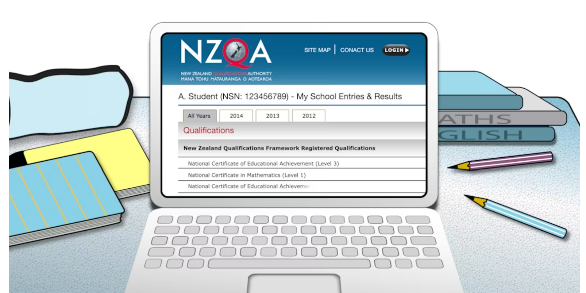
This 6-minute NCEA video is a very good starting point for parents new to NCEA. It is updated annually and is therefore very current.
To view the video in other languages, click here.
Video credit: NZQA
Click here to watch the About NCEA video>To help you a little bit more, in our Year 11 NCEA Rules and Procedures, I have provided a model that I hope very well describes for you in diagrammatic form NCEA Level 1.
So, along with that model, a few of the key facts about how to gain NCEA Level 1 and certificate endorsement that can be gained with it.
NCEA assessment and awards are about the gaining and accumulation of credits (similar to points) and grades from the various internal assessments that are done in class during the year and in the externals (mostly examinations but also other forms such as portfolios) at the end of the year.
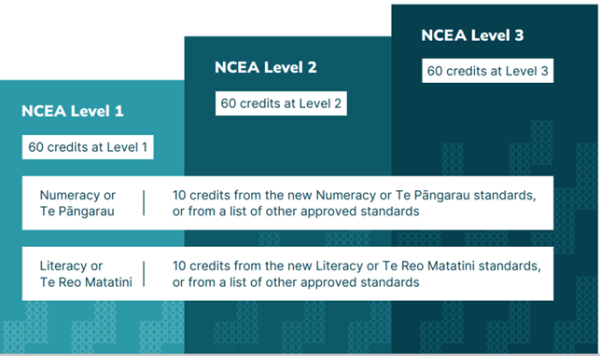
To gain Level 1, a student must gain at least 60 credits from assessments of Standards (mostly called Achievement Standards) and there is no requirement for a certain number of internal, or external, credits. All Standards have a number of credits attached to them and by gaining a Standard, the student gains the associated credits, and grade (there is no difference in credit values whether the grade is Achievement/Merit/Excellence).


A student can gain Level 1 with Merit if they total up Merit or Merit and Excellence grades with their associated credits to at least 50 from any Standards (internal or external).
To gain Level 1 with Excellence, they must total Excellence grades with their associated credits to at least 50.
Students can take more than one year to gain this endorsement and can add to their endorsement total any grades, with their associated credits, gained in the previous year in that Level. This is particularly important to know for those students who are also doing Level 2 (Year 12) courses as part of their overall Year 11 programme this year.
Last year, most Year 10 students sat up to three NCEA online assessments as they worked towards completion of the 20-credit LitNum (Literacy - Reading and Writing, Numeracy) requirement for the new NCEA.
To gain NCEA students must complete this co-requisite and the majority of our Year 10 students successfully met the requirement. As I explained to students at the start of the month, they are able to check their NZQA Learner Login results record to confirm their LitNum ‘status’ – it would be good for you to check with them to see if they have gained it fully or in part only.
2026 Assessments
Details about LitNum will be provided in my next newsletter.
Throughout the year, students will be completing internal assessments digitally and, in Term 4, most Level 1 Prelim and NCEA examinations will be digital only. For all of these assessments, students will be required to use their device which will be expected to be in good working condition and able to last the full length of a 3-hour examination in particular.
The College will not be providing backup devices unless absolutely necessary so the onus is on students to maintain their device so that it can be relied upon throughout the year. Students have already been informed of this, and I would ask that you once again check with them so that you are reassured about the readiness of their device, the battery life especially.
A big feature of NCEA is ongoing internal assessment along with Prelim examinations and NCEA examinations in Term 4.
Some important things to remember about Prelim examinations:
Parents typically find it difficult to know who to contact about an NCEA issue that may have arisen for their child: