
You are logged in as
Logout
You are logged in as
Logout

 The College has a team of professional instructors who deliver our Outdoor Education programme from the Alistair Sidey Mountain Lodge. Outdoor Education is an integral part of the Year 9 and 10 experience, with all students participating in camps and outdoor learning experiences throughout the year.
Programmes are designed to suit the needs, abilities, and development of each group, while taking into account weather and environmental conditions. Students are encouraged to participate fully and challenge themselves in a supportive environment.
Outdoor Education provides opportunities for students to develop confidence, resilience, teamwork, leadership, communication and responsibility; and experience the personal well-being that can develop from active participation in the natural environment.
Year 9
During Term 1, each Year 9 class attends camp at Kura Tawhiti Castle Hill. The purpose of this camp is to bring students together off-campus at the beginning of their secondary school experience so they may develop positive relationships with their peers, teachers, themselves, and the environment.
The camp encourages empathy, participation, contribution, and teamwork, while providing opportunities for students to interact with peers and teachers in a different context and, of course, have fun.
The four-day summer camp may include orienteering, high and low ropes, rock climbing, abseiling, flat-water kayaking, caving, overnight camping, hiking, river crossing, camp craft, group challenges, and, conditions permitting, an overnight Grade 2 whitewater rafting expedition.
Year 10
During Term 3, each Year 10 class attends winter camp, building on the skills and experiences developed during Year 9 camp. The programme provides opportunities for students to further develop personal and interpersonal skills while experiencing challenge in an alpine environment, acquiring practical outdoor skills, and developing values through direct experience.
The five-day winter camp may include a ski or snowboard day, overnight alpine camping or snow caving, hiking, abseiling, rock climbing, camp craft, environmental service, navigation, and group challenges.
Students develop skills in preparation for their Bronze Duke of Edinburgh’s Hillary Award, with the overnight component contributing towards their practice journey.
In Term 4, students return to Kura Tawhiti Castle Hill to complete their Qualifying Journey for the Bronze Duke of Edinburgh Award in conjunction with their Te Waka Solo challenge.
Years 11–13
Students have the opportunity to further their spirit of adventure and discovery by undertaking their Silver and Gold Duke of Edinburgh Adventurous Journeys.
Students can gain a deeper understanding of themselves, the environment and the great outdoors as they work together planning and undertaking a journey in a group to achieve a common team goal.
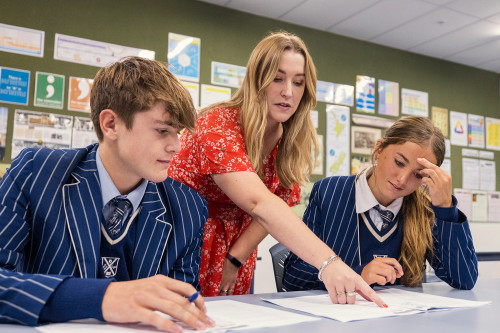
At St Andrew’s College, our approach to Learning Support and Accelerated Learning reflects our commitment to inclusive excellence and the belief that every student is known, valued, and empowered to succeed. Grounded in our kaupapa of equity, high expectations, and belonging, we recognise the diverse strengths, needs, and potential of each learner. There is no ‘one size fits all’ approach; instead, we design responsive, strengths-based pathways that both support and accelerate learning. Through this, we aim to remove barriers, extend opportunities, and ensure all students are equipped to participate fully, make meaningful progress, and flourish within our school community.
Our Learning Support Programme is delivered by a highly skilled team of specialist teachers with expertise in learning diversity, literacy and language development, and student well-being. We work in partnership with students, whānau, and staff to build confidence, independence, and resilience, fostering capable, self-managing learners. Targeted support is personalised and prioritised according to individual need, including reading and language support, as well as study and academic coaching for senior students, with a clear focus on both support and acceleration.
Read more about the Learning Support Programme here.
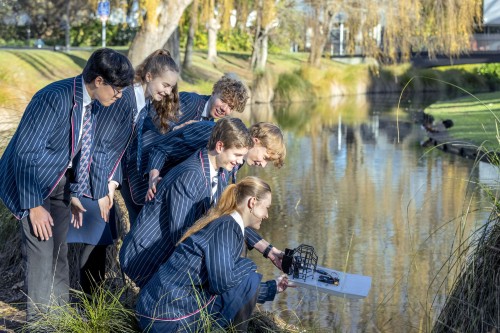 In the Secondary School, the ACEE programmes operate as an option subject. Where possible, students who are identified as academically gifted and/or talented are formally invited into the programme. Students can also self-select this programme. ACEE students are provided opportunities to deepen their learning and experiences.
Overarching Statement
The ACEE programme acknowledges both performance and potential and recognises that a student’s gifts and talents will emerge at times and in circumstances which are unique to that student.
ACEE Programme Vision
ACEE students contributing to the creation of a future New Zealand where extraordinary minds do extraordinary things.
Years 9–10 Academic Extension and Enrichment (ACEE)
Year 9 students work with a specialist teacher. This programme includes learning units based on philosophy, anthropology, neuroscience, political science, and sustainable development. Students complete an individual ‘impact project’ over the semester.
Year 10 students also work with a specialist teacher and enjoy a deeper exploration into areas such as philosophy, neuroscience, sustainable development, political science, and psychology. Students typically complete a Level 2 NCEA internal assessment focused on an action that will lead to a more sustainable future. This assessment accrues six NCEA Level 2 credits. Students aim to achieve Excellence in this assessment and valuable learning opportunities are provided around academic writing. Both Year 9 and Year 10 10 ACEE programmes offer the opportunity for students to display their individual and/or group projects in The Green Centre at a showcase expo later in the academic year.
Year 9–10 ACEE students also have the opportunity to prepare for Brain Bee, a neuroscience competition for Year 11 students, can participate in the Model United Nations Conference (MUNA), the Model European Union Conference, compete in the da Vinci Decathlon and the Ethics Olympiad, and can attend two philosophy conferences each year. In addition, St Andrew’s College also offers Chess, Debating, Future Problem Solving, and a writing masterclass as co-curricular activities for students who are academically gifted and talented.
In Year 11, there is no formal ACEE option, however there are opportunities to continue with Philosophy, the Australasian Brain Bee Competition (neuroscience-based), Model United Nations, Model European Union, and Senior Future Problem Solving. Gifted and talented senior students also have the opportunity for extension, enrichment, and acceleration within specific learning areas, such as English, Mathematics and Science. Higher level extension can be gained from New Zealand Scholarship examinations and/or enrolment in the University of Canterbury STAR Programmes and/or university papers in Years 12–13.
Senior Academic Extension and Enrichment (ACEE) Years 12–13
The Senior ACEE programme in Years 12 and 13 fosters high levels of student agency and earned autonomy, empowering learners to shape their educational journey through choice, initiative, and self‑direction. Grounded in European educational models, the programme embraces the concept of transformational giftedness—a view that supports using exceptional talents to effect positive change in the world. As defined by Sternberg (2020), transformational giftedness is:
“Exceptional ability or talent that can enable or has enabled an individual to make one or more extraordinary and meaningful contributions that help to make the world a better place.”
Alongside promoting individual academic success, Senior ACEE encourages students to pursue challenges that resonate with a “beyond‑self” orientation, nurturing a deep sense of responsibility to society. This ethos closely aligns with the values celebrated by the New Zealand Rhodes Scholarship, which recognises not only intellectual excellence but also leadership, character, and a demonstrated commitment to service.
Key Strengths of Senior ACEE
Course Costs: There is a cost for most of the extra-curricular activities and events such as Future Problem Solving tutoring, conferences, and participation in events such as Brain Bee. There can also be individual costs for expert tutoring in art painting, coding, and electronics to support the development of impact projects.
For further information please contact Ms Hampson.
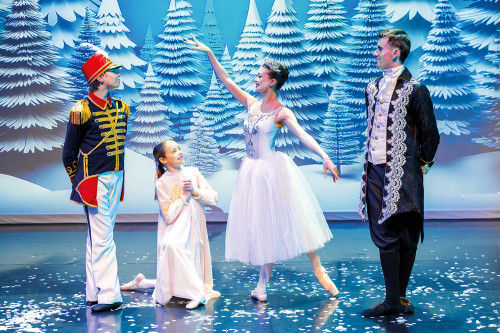 Dancers in Years 12–13 can enjoy the experience of a Ballet Company. Following on from our Year 11 Ballet and Dance Studies programme, this co-curricular subject (four+ hours/week, outside of academic classes) continues with balletic technique, performance training and productions, specialist guest tutors, and NCEA Dance credits (across the dance genres) each year. Dancers may also take the highest pre-professional examination of Solo Performance Diploma, and it is also possible to gain University Entrance in NCEA Dance over the two–year period in the Company. Year 13 dancers, having completed the five–year Ballet Academy course (if commencing in Year 9), graduate with our St Andrew’s College Ballet Academy Diploma (those with fewer years due to commencing later, may apply for cross-credits from prior study, or alternatively gain the Ballet Academy Certificate). Experienced dancers who are new to the programme are very welcome to apply to join the Company.
Prerequisite: New students, suitable ballet background and a short audition with Artistic Director, Dr Cairns. Current Year 11 student, recent Year 11 examination results at Highly Commended or above, or by Head of Department discretion.
NCEA Dance: 5 internals (22 credits) across the two years. Course endorsement is not available as there are no external credits.
Course costs: $450 per term (includes in-class guest tutors, repertoire half tutu/character skirt use, and other incidentals).
Additional costs: Examination fees, costume hires and optional classes.
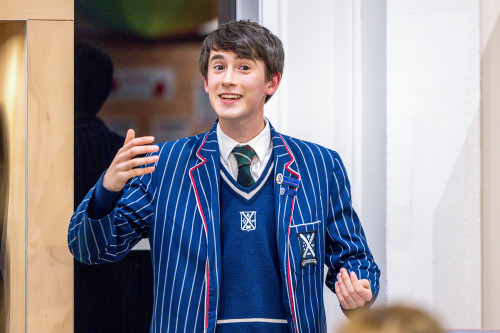 There are three speech and drama tutors working in the College. They teach a range of skills including speech, drama and public speaking. Students can have individual, pairs, or small group lessons, depending on requirements. Lessons are organised at a time to suit the student and classroom teachers. Students can sit Speech New Zealand or Trinity examinations and many also participate in the Christchurch Competitions Society Speech and Drama competitions in the July holidays. However, students do not have to sit examinations or enter competitions, some also come just for confidence and for enjoyment.
To sign up for Secondary School Speech and Drama, click here.
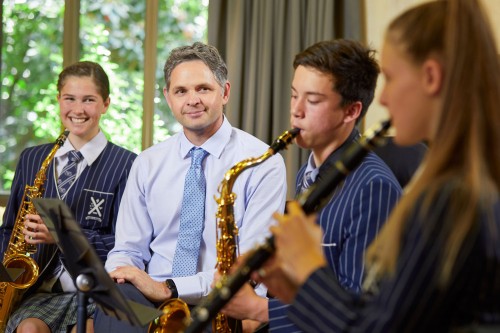 The Music Department runs an extensive programme of Instrumental and Vocal Tuition. Around 22 tutors come into the College each week, some of them across two or three different days. For private lessons in the Music Suite Studios, tutors charge $35.00–$45.00 per half hour lesson. Approximately 30–33 lessons are taken during the course of the academic year in school time, mostly in the morning and early afternoon, dependent on student and tutor timetables. A number of lessons are also taken after school, especially guitar and drums, however, this is again subject to tutor availability. Lessons are able to be rotated or lesson times changed each term to ensure students do not miss out on the same subject area each week.
Occasionally parents are worried about the impact upon their children’s academic progress by coming out of class for a half-hour music lesson each week. Parents can rest assured that there have been no issues experienced at St Andrew’s College relating to students not keeping up in class due to a music lesson related absence.
Theory and ear training lessons are also available. The College has a supply of instruments for hire at $75.00 per term (prices may be subject to change). Instrument hire is disbursed at the start of each semester.
For further details on our itinerant Music programme and for information about the variety of co-curricular performing groups available, please contact Performing Arts Co-ordinator, Ms Thorner, or Head of Music, Mr Ferguson.
View the Music Department Information Booklet here.
To sign up for Instrumental and Vocal Tuition, click here.

 Secondary School Curriculum