You are logged in as
Logout
You are logged in as
Logout

Dear Parents and Caregivers
In Week 8 of this term, Year 9 students will be sitting their 'end of year' examinations and assessments in English, Mathematics and Social Studies. Students will sit their Science assessments in Term 4.
In this newsletter, I will provide you with details about the assessment programme and information that we are providing to students in the form of learning resources, hints and tips. At St Andrew's College, we believe strongly in having our students sit end of year assessments and examinations, so we expect all students to sit all their assessments as per the timetable that they will receive next Wednesday. The results provide excellent summative information about students’ achievement to teachers, help inform teacher decisions about class placements for next year, and provide feedback to the students on their areas of strength and on areas where they need to improve. Sitting these examinations also helps students prepare for their higher-level examinations from Year 11 onwards.
Please feel free to contact me via email with any questions that you may have about any matters raised in this newsletter at DBV@stac.school.nz.
Kind regards
David Bevin
Head of Teaching and Learning – Secondary

Most examinations and assessments are online and therefore provide students with the opportunity to complete assessments in the way that they are being increasingly delivered for national qualifications. We have particular expectations of our students when completing online examinations and teachers have been informing them about this over this term. It is really important that students understand our expectations for device readiness for each examination and do not expect the College to simply provide them with one for an examination; this will only be done in exceptional circumstances.

(Note that students are receiving a lot of information about the examinations in the form of Teams posts, year group meetings with me, year group hui with the Dean and in tutor time. They are expected to be responsible for knowing what is happening and when with their examinations week).
When are the examinations?
 Examinations and assessments take place in Week 8 of this term. Students will sit their examinations according to a timetable that will be emailed to them next Wednesday, 26 August and Year 9 students will meet with me next Thursday, 27 August, for an examination briefing. Examinations will be sat as follows:
Monday 7 September: English (11.00am–12.30pm)
Tuesday 8 September: Mathematics (1.30pm–3.15pm)
Wednesday 9 September: Social Studies (8.45am–10.15am)
What type of examinations are they?
In keeping with the digital platform for NCEA examinations in many subjects, students will sit their English and Social Studies examinations online, using the exam.net platform that is used widely in assessments in the College. They will complete their Mathematics examination on paper.
More and more NCEA examinations are sat online (especially at Level 1) so having our students sit their examinations in this way gives them excellent practice for what they will be expected to do in their externals from 2029.
How long are the examinations?
 Examinations are 1 hour 30 minutes to 1 hour 45 minutes in length depending on the subject. Papers are set with realistic timings for completion in the set time frame. All external examinations are three hours long so, again, students are having practice in completing examinations over a longer period of time.
Where are the examinations sat?
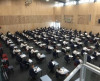 Almost all examinations are sat in Gym 2 in full NCEA-style conditions. Other classrooms in Gym 2 will be used where we cannot accommodate a full cohort in Gym 2 alone or where a number of students have SAC entitlement. Students are identified and are fully informed by our Learning Support department; their staff will ensure that students who qualify for an SAC receive their full entitlement (some students have ‘extra time’ entitlement and will still sit their examinations in the main room).
Each examination session requires students to assemble for a rollcall with their year group Dean earlier than the examination start time. Students are required to stay for the full duration of an examination.
How are students receiving the examinations information?
 Students are receiving information about the content and nature of their examinations from their subject teachers. I am running several information presentations for the year group leading up to the examinations and other information will be given to students through their tutor and in posts on the year group team. And, as stated previously, students will receive their timetable with timings and rooming details in an email next week.

We expect all students who are sitting online examinations to ensure that their device is always in full working order and will have sufficient battery life to enable them to complete each online examination. They are expected to come to each examination with the computer fully ready for effective use; if a student forgets to bring their device, they may be able to request the use of a school device from Mr Bevin just prior to an examination, but this is not encouraged.
Exam.net has a locked-down browser that means students must not move out of the browser window at any stage during the examination. This enables us to ensure that students are acting honestly during their examination.

 Bringing in study notes, cell phones and wearing smart watches is prohibited as is the case in national examinations.
Do students have study leave from classes?
Students do not have study leave, i.e. days away from school, but may possibly be given some study time in some classes between examination sessions.
How important is students’ attendance at their examinations?
All students are expected to sit all of their examinations and assessments at the time that is timetabled. If a student is unwell and unable to attend an examination, they may possibly be able to sit the examination later but it is hoped that this will not be necessary. Students must not make appointments in this week that cause them to miss an examination, or part of an examination. If a student is absent the usual procedure for notifying the college is expected to be followed.
Following is information about the Special Assessment Conditions (SAC) arrangements for the examinations.
English, Social Studies and Science:
Mathematics:
A number of Year 9 students are sitting a Cambridge IGCSE examination in Term 4 in Global Perspectives. Please click on these links if you need to refresh your understanding of the Cambridge qualification Information for parents and students and Learning with lasting impact.
What to expect on the day
 Please watch this short video guide for students and parents by clicking here: https://www.youtube.com/watch?v=Qn58LXdApEo
The formal timetable for Cambridge IGCSE examinations shows this confirmed time and will be sat during the school day:
|
Tuesday 27 October |
Morning exam |
Global Perspectives |
1 hour 25 minutes |
As you will be aware, all parents of students sitting these examinations have paid examination fees to Cambridge International; these fees are not refundable even with withdrawals from the examinations.
 I will be meeting with the students involved in these examinations during their Extended Tutor Time on Thursday 17 September to discuss the rules and processes that must be followed as this is a high-stakes and formal examination. At that time, students will also receive a confirmed examination timetable from me. There are very clear and firm expectations of the students for these examinations that must be met.
Attendance
There is no opportunity to sit these examinations at another time therefore students’ attendance as scheduled is required.
Paper examinations
These examinations are sat on paper, so a student laptop is not required.
This term, we have provided advice and guidance to all students as they prepare for their upcoming examinations and assessments. The following information has been posted on each year group’s Teams page:
How can I learn more effectively to prepare myself for examinations?
Although there are a number of weeks before examinations, it is important that you begin a revision programme to ensure you are in the best possible space to succeed.
Did you know that re-reading and highlighting notes is an ineffective way of learning unless you practice getting that information out of the head without notes?
Retrieval practice is the most effective way of doing this, as it makes your brain work to recall information, which helps strengthen your memory and learning. Your brain then has space to transfer this learning into new contexts.
Why do I need to work at getting content out of my head? You need just the right amount of challenge to make the learning stick. Like exercise, learning works the same way: If there is no pain, there is no gain.
Watch this video here that explains this: Dr. Becky on The Learning Space
Here is a video that explains this: Examination Series: Retrieval Practice
Your subject teacher will guide you with specific information related to that subject and there are a range of very useful resources for study available here: stac.nz/EffectiveLearningStudyResources
These two documents have also been linked to Teams as a reference:
An outline of the pomodoro technique to help focus your study: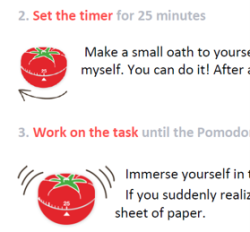
Six strategies that are proven to be effective for learning.

The examinations period is a very busy time for students and staff will be emphasising to them that they must prepare for these events and attempt to do their best. There will be a lot of instructions provided to students and there will be information to read and emails to check so they do need parents’ support by checking in on them that they are aware of what is going on, where and when and by keeping them up to the task of studying, revising, setting targets for their preparation and by ensuring that their device is ready and in good shape for each assessment.